
MENU

Effective demand planning and forecasting is critical to aligning material availability with operational needs. This process must be informed not only by short-term production schedules but also by long-term Life of Mine (LoM) and asset management plans, to ensure materials are available throughout the entire mining lifecycle
Learn more.svg)
Once the planning for a new asset has been completed, the organisation can proceed with how they will procure the asset (via a tender/contract, or purchase order etc).A critical spares analysis should be carried out to determine risk of extended downtime in the event of an unplanned failure & inventory holdings should be adjusted accordingly.
Learn moreStrategic sourcing sets the foundation for parts availability and cost control by aligning supplier selection and contract terms with operational needs.
Learn moreEffective procurement ensures timely acquisition of goods and services that meet quality, cost, and schedule requirements. Operations and Maintenance provide demand forecasts and specifications, Supply Chain executes purchase orders and manages vendor relationships, while Finance oversees financial controls and payment processes.
Learn moreThe movement of materials from suppliers to site demands seamless coordination. Supply Chain oversees freight contracts and shipment tracking, Operations communicates operational priorities, Maintenance communicate urgency and identifies critical spares for expedited handling, and Finance monitors freight costs and compliance.
Learn moreAccurate and consistent cataloguing is fundamental to effective materials management. Establishing clear master data standards ensures that every item is uniquely identified, described, and categorised in a centralised system.
Learn moreRepairable items are high-value, long-lead, or critical components that can be refurbished and returned to service rather than replaced, delivering significant cost savings, reducing lead time risks, and improving asset availability. Credit returns involve returning unused or excess materials to the warehouse or suppliers for a credit or refund
Learn moreMaster Data must be accurately entered and updated into an organisation's computer systems as information about the material changes over time. This goes for all types of Master data in the system.
Learn moreWarehousing focuses on the physical flow of goods receipting deliveries, storing items in safe and accessible locations, issuing them to end users and conducting stock takes.
Learn moreInventory control is the governance and oversight of stock monitoring stock-outs, identifying surpluses, reconciling variances, and ensuring the ERP or materials management system master data is updated accurately and in real time.
Learn moreDelivery and Distribution ensures materials are delivered from the warehouse or laydown areas to the operational point of use, the end user. Smooth distribution and goods tracking systems can minimise downtime.
Learn moreDisposal covers the responsible handling of obsolete, damaged, or non-conforming materials that cannot be returned or reused. Effective repurposing and recycling reduce waste, improves ESG performance, and can generate secondary revenue streams. This ensures that surplus or obsolete materials are repurposed for alternate uses.
Learn moreContinuous improvement ensures materials management processes remain efficient, resilient and aligned with operational requirements through ongoing review, optimisation and innovation.
Learn moreCost control ensures materials are sourced, stocked, handled and disposed of in the most cost-effective manner while maintaining required service levels and minimising operational risk.
Learn morePerformance should be analysed through regular KPI and performance reports. These reports drive decision making across procurement, inventory, warehousing and supply chain activities and are enabled by accurate ERP master data.
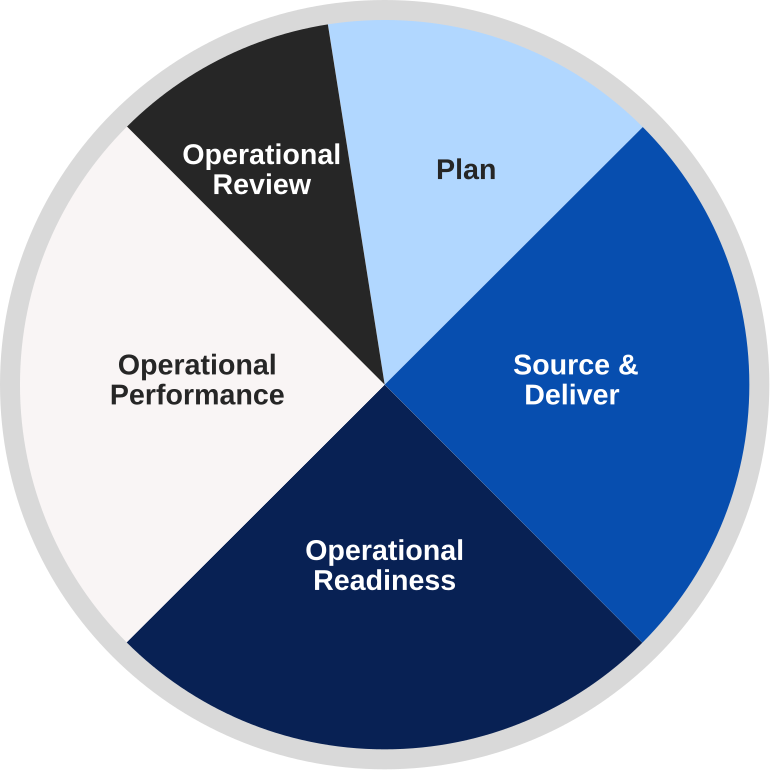
Learn moreClick on an element for more information >>>
"Materials Management is the process of planning, acquiring, handling, and controlling materials used in production or operations. It ensures that the right materials are available at the right time, in the right quantity, and at the right cost."