

MENU

A major asset management improvement initiative to develop and implement a structured Asset Criticality Tool.
.jpg)

A major asset management improvement initiative was undertaken at a large-scale food processing facility to develop and implement a structured Asset Criticality Tool aimed at improving maintenance effectiveness and risk visibility.
The site was operating under a predominantly reactive and time-based maintenance approach, where preventive maintenance tasks were applied uniformly across assets without clear prioritisation. This led to:
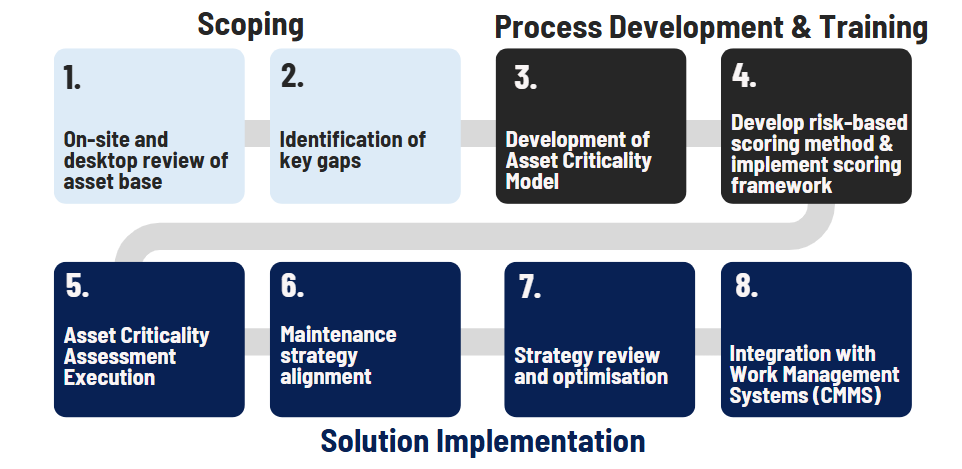
To address these challenges, a risk-based asset management framework was developed and implemented. This involved creating a comprehensive asset register, defining functional and performance standards, and establishing a multi-criteria criticality model incorporating health & safety, environmental, financial, quality, and compliance risks.
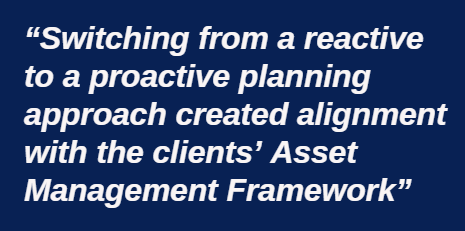
The implementation enabled a transition from a reactive maintenance environment to a proactive, risk-based maintenance strategy, ensuring that high-criticality assets such as bulk material handling systems and packaging equipment were prioritised appropriately. This resulted in improved maintenance efficiency, enhanced reliability, and a scalable framework for continuous asset management improvement.
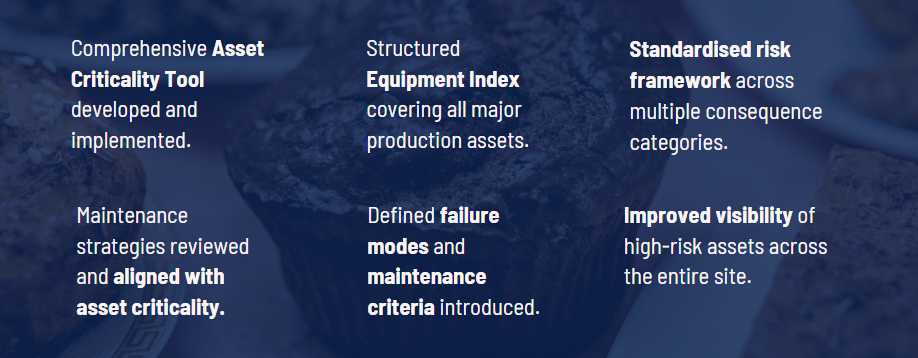
Marlanda delivered a comprehensive Asset Criticality Tool, a structured Equipment Index covering all major production assets, and a standardised risk framework across multiple consequence categories. Maintenance strategies were reviewed and aligned with asset criticality, while defined failure modes and maintenance criteria were introduced, improving visibility and risk management of high-risk assets across the entire site.
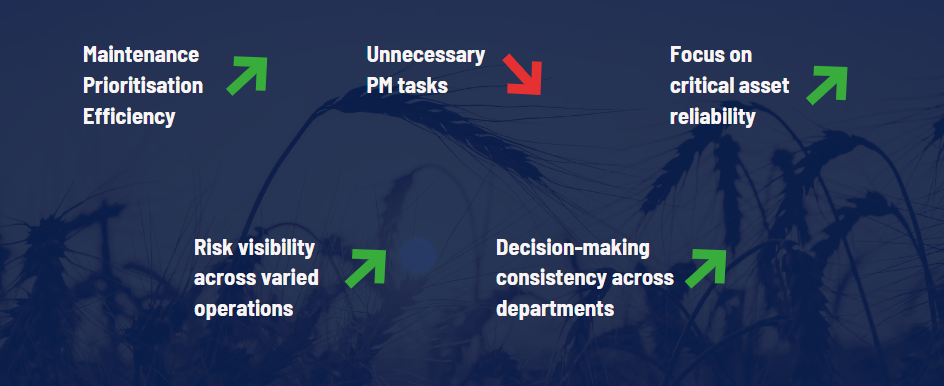
The project outcomes improved maintenance prioritisation efficiency, risk visibility across varied operations, decision-making consistency across departments, and focus on critical asset reliability, while reducing unnecessary preventive maintenance (PM) tasks.
To sustain the benefits of the asset criticality implementation, ongoing initiatives focus on embedding the framework into daily operations and continuous improvement processes.
Future steps include:
By embedding a structured asset criticality approach, the organization is positioned to achieve long-term reliability, improved operational efficiency, and data-driven maintenance decision-making.


.png)
.jpg)





